Patan Durbar Square

Patan Durbar Square is situated at the centre of the city of Lalitpur in Nepal. It is one of the three Durbar Squares in the Kathmandu Valley.
It was built 12th century is known for its beautiful gold works shining very graciously. The Famous Temple Which was built in the 17th century, the temple of Lord Krishna holds a commanding position in the palace complex of Patan. It is the only temple in Nepal to have 21 shrines and is completely made of stone.
Patan Durbar Square


Patan Durbar Square is a monumental area in Kathmandu Valley that is packed with ancient monuments, temples and shrines.
Patan Durbar Square

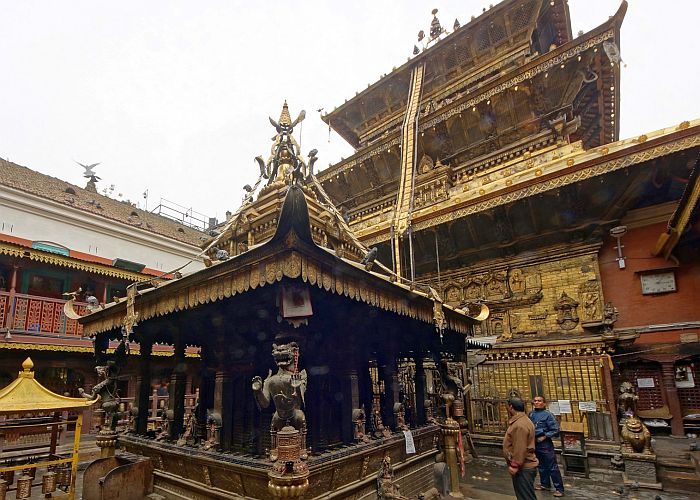
Located inside kwabadehul, this three- story golden pagoda of Lokeshwar (lord Buddha) was built in the twelfth century by king Bhaskar Verma. It is famous as the golden temple. Inside the upper story of the pagoda, are the golden images of lord Buddha and a large prayer wheel.
Golden Window
This was specially built for King Siddhi Narasingha malla. His devotion to Lord Krishna as well as the Buddhist God of compassion Karunamaya Lokeshwar is a famous episode in Nepalese history of religion.
Mahabouddha Temple
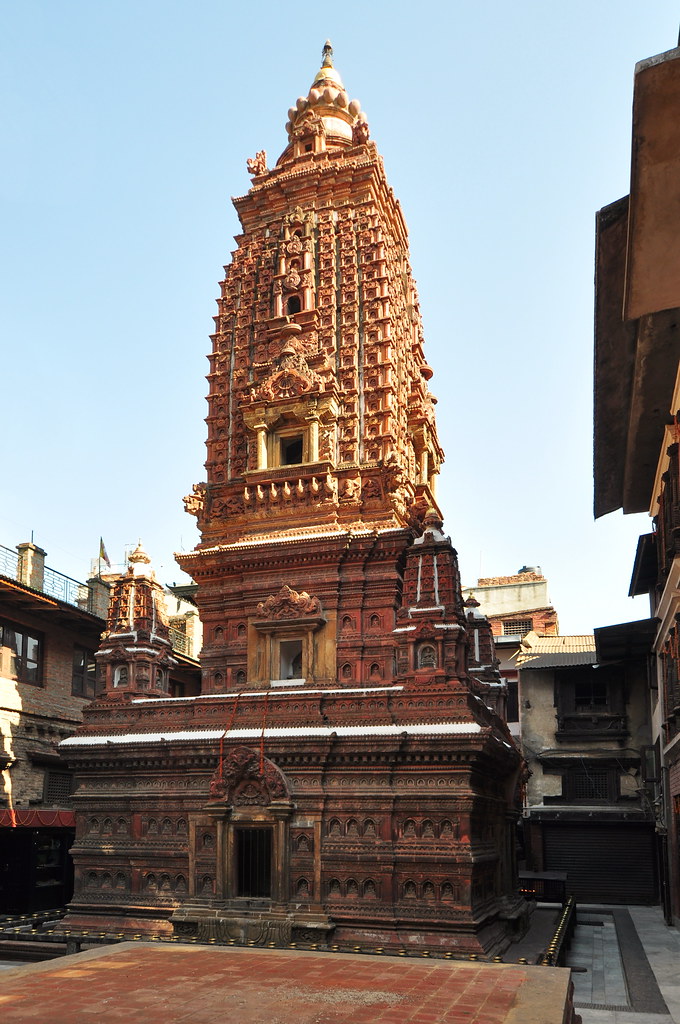
This temple of Buddha built interestingly in the Hindu Shikara style- has five golden pinnacles. They are all in a stupa shape very symbolic of five basic elements.
Golden Temple
This golden temple of Buddha in Patan is the oldest richest and most famous monument indeed. It was built 12th century is known for its beautiful gold works shining very graciously.

The Famous Temple Which was built in the 17th century, the temple of Lord Krishna holds a commanding position in the palace complex of Patan. It is the only temple in Nepal to have 21 shrines and is completely made of stone. Most of the important scenes from the ancient Hindu epics the Ramayana and the Mahabharata, have been engraved on its friezes.
The Major attraction of Patan Darbar Square
Patan Museum
This museum inside the durbar square specializes in bronze statues and religious objects. It is considered as one of the best museums in Asia.
Hiranya Varna Mahavihar
This museum inside the durbar square specializes in bronze statues and religious objects. It is considered as one of the best museums in Asia.
Hiranya Varna Mahavihar
Located inside kwabadehul, this three- story golden pagoda of Lokeshwar (lord Buddha) was built in the twelfth century by king Bhaskar Verma. It is famous as the golden temple. Inside the upper story of the pagoda, are the golden images of lord Buddha and a large prayer wheel.
Golden Window
This was specially built for King Siddhi Narasingha malla. His devotion to Lord Krishna as well as the Buddhist God of compassion Karunamaya Lokeshwar is a famous episode in Nepalese history of religion.
Mahabouddha Temple
This temple of Buddha built interestingly in the Hindu Shikara style- has five golden pinnacles. They are all in a stupa shape very symbolic of five basic elements.
Golden Temple
This golden temple of Buddha in Patan is the oldest richest and most famous monument indeed. It was built 12th century is known for its beautiful gold works shining very graciously.
Krishna Temple is Famous at Patan Durbar Square
The Famous Temple Which was built in the 17th century, the temple of Lord Krishna holds a commanding position in the palace complex of Patan. It is the only temple in Nepal to have 21 shrines and is completely made of stone. Most of the important scenes from the ancient Hindu epics the Ramayana and the Mahabharata, have been engraved on its friezes.
HISTORY:
It is believed that the Kirat dynasty founded the city in the third century B.C. and which was later expanded by the Licchavis in the Sixth century. During the medieval period it was further expanded by the Mallas. Though there are many legends for the formation of its name, many believe that the name of the town is kept after a farmer called Lalit, who carried God Rato Machhindranath to the valley all the way from Assam in India. He brought this God to the valley to overcome the worst drought in the valley. It was due to Lalit’s effort that the God Rato Machhindranath was settled in Lalitpur. This is how Lalitpur meaning Lalit the farmers name and pur meaning worship was formed.
The founder King Veer Deva founded Lalitpur in 299 A.D, but scholars unanimously believed that Patan was a well established and developed town since the ancient times. Patan is believed to be the oldest of all the cities of Kathmandu Valley according to several historical records including many other legends. According to a very old Kirat chronicle, Patan was founded by Kirat rulers long before the Licchavi rulers came into the political scene in the Kathmandu Valley. The earliest know capital of the Kirat rulers was Thankot, in accordance to this chronicle. The most typical name used by the Newars for Pata is Yala.
The city was primarily designed in the shape of the Buddhist Dharma-Chakra. The four thurs or mounds located on the perimeter of Patan are attributed around, one at each corner of its cardinal points, which are popularly known as Ashoka Stupas. Legend has it that in the 250 B.C. Emperor Ashoka along with his daughter visited Kathmandu and erected five Ashoka Stupas, four in the surrounding and one at the middle of Patan. The size and shape of these stupas seem to breathe their antiquity in a real sense. There is more than 1, 200 Buddhist monuments of various shapes and sizes scattered in and around the city. Among which Patan Durbar Square is the most important monument of the city. It has also been listed by UNESCO as one of the seven Monument Zones that make up the Kathmandu Valley a World Heritage Site in 1979. All the monument zones are declared as the protected monument zones according to the Monuments Preservation Act of 1956.


No comments:
Post a Comment